
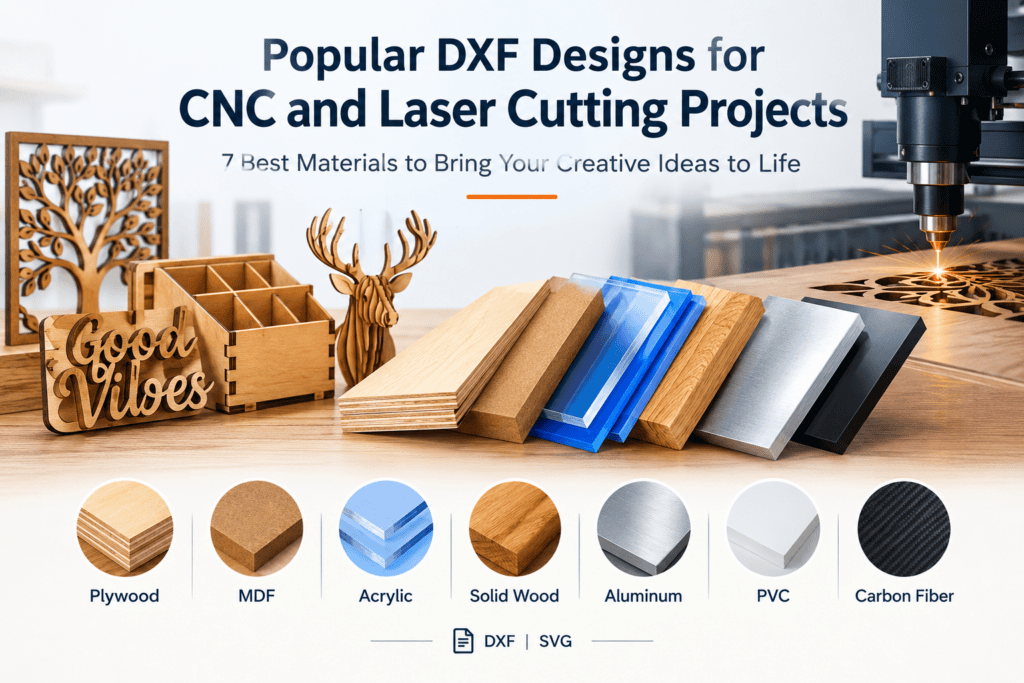
Popular DXF Designs for CNC and Laser Cutting Projects
DXF designs for CNC and laser cutting offer makers, designers, and woodworking enthusiasts a convenient way to create decorative and functional projects using digital files. At DXF Portal, you can explore downloadable DXF and SVG designs for wall art, signs, organizers, personalized gifts, ornaments, and many other creative applications. These digital designs help users prepare their projects using compatible CNC routers and laser cutting machines.
Understanding the best materials for CNC and laser cutting can help beginners and experienced makers plan their projects more effectively. Whether you are creating decorative wall art, personalized gifts, signs, organizers, or functional components, choosing a suitable material makes a significant difference.
In this guide, we will explore seven popular materials, their common applications, and important factors to consider before starting your next project with DXF designs for CNC and laser cutting.
1. Plywood – A Popular Choice for DXF Designs for CNC and Laser Cutting
Plywood is one of the most widely used materials for decorative and functional cutting projects. It is made by bonding multiple thin layers of wood together, creating a material that is available in different thicknesses and grades.
Plywood is commonly used for:
-
Decorative wall art and wooden signs
-
Layered 3D designs
-
Storage organizers and holders
-
Personalized gifts and ornaments
-
Home decoration projects
Plywood is popular because it offers a natural wooden appearance and is available in many sizes. Its relatively consistent structure also makes it suitable for many DXF designs for CNC and laser cutting, including decorative panels, signs, ornaments, and layered designs.
However, the quality of plywood can vary depending on its grade, adhesive, and internal layers.
Before laser cutting plywood, confirm that it is suitable for laser processing and does not contain unsafe adhesives or coatings. Always follow the material manufacturer’s recommendations and your machine’s safety guidelines.
2. MDF – Suitable for DXF Designs for CNC and Laser Cutting
Medium-density fiberboard, commonly known as MDF, is manufactured from wood fibers combined with resin under pressure.
Its relatively uniform structure makes it useful for many decorative CNC routing and laser cutting applications. MDF can work well with DXF designs for CNC and laser cutting when the material thickness and machine settings are appropriate.
Common uses include:
-
Decorative panels
-
Wall decorations
-
Furniture components
-
Display pieces
-
Small organizers
MDF provides a smooth surface that can be painted or finished according to project requirements.
However, MDF produces dust during machining and may release harmful fumes during laser processing. Always check the manufacturer’s safety information and machine compatibility before using it. Use appropriate extraction and ventilation.
3. Acrylic – Great for Modern DXF Designs for CNC and Laser Cutting
Acrylic is a popular plastic material available in transparent, coloured, and opaque varieties. It is often used for projects where a clean, polished, and modern appearance is desired.
Common applications include:
-
Nameplates and signage
-
Decorative lighting panels
-
Display stands
-
Personalized gifts
-
Decorative wall designs
Laser-compatible cast acrylic is commonly selected for laser cutting because it can produce clean edges when processed using suitable equipment and settings.
Many DXF designs for CNC and laser cutting can be adapted for acrylic projects, particularly signs, nameplates, display pieces, decorative panels, and personalized designs.
Not every plastic is suitable for laser cutting. Never cut PVC, vinyl, or unknown plastics with a laser because they can release dangerous gases and damage equipment.
4. Solid Wood – Natural and Attractive Results
Solid wood is another excellent choice for CNC routing and suitable laser engraving projects.
Different wood species offer different colours, grain patterns, hardness levels, and machining characteristics.
Solid wood is often used for:
-
Wooden nameplates
-
Furniture components
-
Decorative signs
-
Personalized gifts
-
Carved patterns and panels
Hardwoods and softwoods behave differently during machining. Grain direction, knots, moisture content, and wood density can all affect the final result.
For the best outcome, choose a wood species that suits your design and the capabilities of your machine. Simple and detailed DXF designs for CNC and laser cutting can produce different results depending on the wood thickness and grain structure.
5. Aluminum – Useful for CNC Machining
Aluminum is a lightweight metal widely used in CNC machining. It is valued for its strength, corrosion resistance, and versatility.
Common applications include:
-
Machine components
-
Custom brackets
-
Equipment panels
-
Engraved plates
-
Functional mechanical parts
Aluminum is suitable for CNC milling with appropriate tooling, cutting speeds, and machine capabilities.
Standard CO2 laser cutting machines generally cannot cut ordinary aluminum sheet. Specialized fiber laser equipment is commonly used for cutting metals. Always check your machine specifications before selecting aluminum for a project.
When using DXF designs for CNC and laser cutting with aluminum, make sure the design is compatible with the intended machining process and that the dimensions and tool requirements are suitable.
6. Cardboard and Paperboard – Ideal for Lightweight Projects
Cardboard and paperboard are useful materials for prototypes, packaging, decorative models, and lightweight designs.
They are commonly used for:
-
Packaging prototypes
-
Decorative models
-
Craft projects
-
Paper-based ornaments
-
Design testing
These materials are relatively inexpensive and can be useful when checking the proportions and layout of a design before working with more expensive materials.
Cardboard can also be useful for testing DXF designs for CNC and laser cutting before moving to plywood, acrylic, or other project materials.
Use only materials approved for your cutting equipment, and follow fire-safety precautions when laser cutting paper-based products.
7. Leather – Suitable for Personalized DXF Designs for CNC and Laser Cutting
Suitable natural leather and specifically approved laser-compatible leather materials can be used for engraving and selected cutting projects.
Common applications include:
-
Personalized keychains
-
Decorative accessories
-
Wallet components
-
Name tags
-
Craft products
Leather varies in thickness, texture, and treatment. Some synthetic leather products contain PVC or other unsuitable materials, so always verify the composition before laser processing.
DXF designs for CNC and laser cutting can be used as a starting point for creating personalized leather products when the design and cutting method are appropriate for the selected material.
How to Choose Materials for DXF Designs for CNC and Laser Cutting
Selecting the best materials for CNC and laser cutting depends on the purpose of your project, the machine you are using, and the finish you want to achieve.
When choosing DXF designs for CNC and laser cutting, consider these important factors:
1. Machine Compatibility
Check whether your CNC router or laser machine supports the selected material. Different machines have different cutting capacities and operating requirements.
2. Material Thickness
Choose a thickness that suits your design and machine’s cutting capacity. The thickness of the material can affect cutting time, edge quality, strength, and the final appearance of the project.
3. Design Complexity
Intricate designs may require materials that can handle fine details without breaking or deforming. Small details and narrow connections should be appropriate for the selected material thickness.
4. Project Requirements
Decorative projects, functional components, and prototypes may require different material properties. Consider strength, flexibility, appearance, and durability before beginning the project.
5. Surface Finish
Consider whether the final product needs painting, polishing, staining, engraving, or another finishing process. Some materials are easier to finish than others.
6. Safety Requirements
Check the material manufacturer’s safety information and use suitable extraction, ventilation, and protective equipment. Never process a material unless you know that it is suitable for your machine.
Why Material Selection Matters for DXF Designs for CNC and Laser Cutting
A DXF design contains vector geometry that guides compatible CNC and laser cutting software. However, a digital design alone does not determine the final manufacturing result.
The selected material, its thickness, machine capabilities, tool settings, and cutting method all influence the finished product.
For example, a detailed DXF design may work well with thin plywood or acrylic but may require adjustments when used with a thicker or harder material. Similarly, a design intended for CNC routing may need different considerations than one prepared specifically for laser cutting.
Before starting a project, review the design dimensions and ensure that the material is suitable for the intended application.
If you are new to digital cutting files, read our guide on What Are DXF Files? A Complete Guide for CNC and Laser Cutting.
You can also learn how to prepare your design correctly in our article about How to Prepare a DXF File for CNC Routing and Laser Cutting.
Choosing the Right DXF Designs for Your Project
The right digital design can make it easier to plan a CNC or laser cutting project. Before downloading or using a DXF file, consider the final size, material thickness, machine type, and intended application.
For decorative projects, you may want to explore wall art, signs, ornaments, layered designs, and personalized decorations. For functional projects, organizers, holders, brackets, boxes, and other practical designs may be more suitable.
At DXF Portal, you can explore a variety of DXF designs for CNC and laser cutting, including DXF and SVG designs created for different CNC, laser cutting, woodworking, and crafting applications.
Final Thoughts
Choosing the right material can make your CNC routing and laser cutting projects easier to plan and more successful to complete.
Plywood, MDF, acrylic, solid wood, aluminum, cardboard, and suitable leather materials each offer different possibilities. The best option depends on your design, machine specifications, project requirements, and safety considerations.
Take time to understand the properties of each material before beginning your work. With proper material selection and suitable DXF designs for CNC and laser cutting, you can explore a wide range of creative and practical projects.
Whether you are creating wall art, personalized gifts, signs, organizers, ornaments, prototypes, or functional components, selecting the right material is an important step toward achieving better results.
Explore the downloadable designs at DXF Portal and find inspiration for your next CNC routing, laser cutting, or woodworking project.